What To Know Before Buying Acreage Near Athol
July 16, 2026
July 16, 2026
Buying acreage near Athol can feel like a dream until the details start piling up. You may be picturing privacy, a shop, a barn, or room to build the kind of property that fits your lifestyle, but rural land asks more questions than a typical neighborhood home site. If you want to buy with confidence, it helps to know what to verify before you fall in love with a parcel. Let’s dive in.
One of the first things to confirm is where the parcel actually falls. Land near Athol may be inside Athol city limits, in Athol’s area of city impact, or in unincorporated Kootenai County. That matters because the rules, maps, and permitting paths can change depending on jurisdiction.
Kootenai County notes that its Building Division governs structures outside city limits. Athol also publishes separate maps for city limits and the area of city impact, while Kootenai County Planning points buyers to its web map for zoning, ownership, addresses, and parcel data. Before you evaluate price or layout, make sure you know which set of rules applies.
Zoning affects more than whether you can build a house. It can influence setbacks, accessory structures, land use, and how your property may function over time. If you want acreage for a shop, barn, storage building, or other rural use, zoning should be part of your first conversation, not your last.
In Kootenai County’s Rural zone, the stated intent includes rural residential uses and agricultural pursuits such as farming and forestry. The minimum lot size is 5 acres, with setbacks of 25 feet in front, 10 feet on the side, and 15 feet at the rear. Accessory buildings are allowed once a primary use is established.
Acreage often appeals because it offers elbow room, but nearby uses still matter. Kootenai County specifically notes that residential development is moving closer to established agricultural and timber operations. In practical terms, that means the parcel next door may shape your daily experience just as much as your own land.
This is not automatically a negative. It is simply part of rural living near Athol. If you are buying for peace, flexibility, or long-term value, it is smart to evaluate surrounding uses early so your expectations match the setting.
The same factors that affect your enjoyment today can affect resale later. Kootenai County’s planning materials point to the value of reducing conflict between homeowners and agricultural or forest land users. That is a useful reminder that rural lifestyle appeal and rural-use realities often come together.
Athol’s location also helps explain why acreage demand stays interesting to many buyers. The city is about 4 miles west of Farragut State Park, and many residents commute to nearby larger cities. That mix of outdoor access and regional connectivity can be appealing, but only if the property works well in practice.
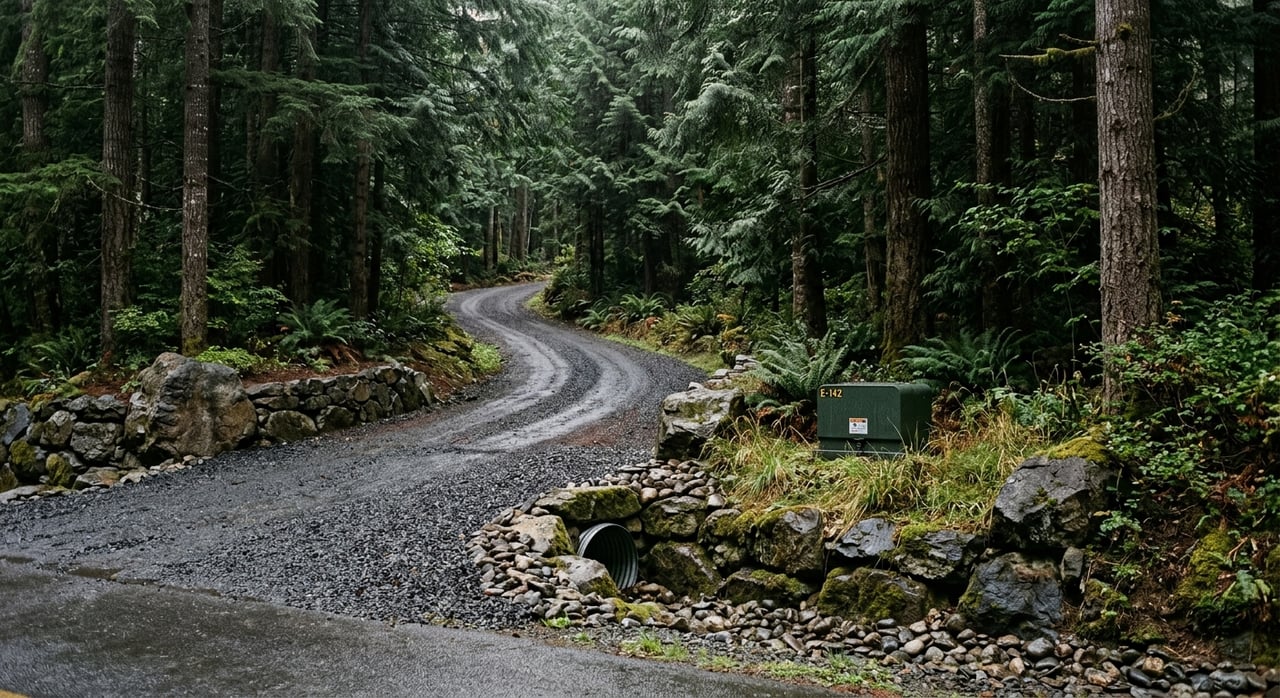
Access can make or break a rural purchase. A beautiful parcel does not help much if the legal access is unclear, road maintenance is uncertain, or the route becomes difficult in future seasons or future development conditions. This is one of the most important parts of acreage due diligence.
Kootenai County’s road standards ordinance says major subdivision roads must comply with Associated Highway District standards. Private roads must be dedicated to a maintenance entity, and roads in minor subdivisions or condominiums must meet current International Fire Code standards. The ordinance also allows a privately maintained common driveway for four or fewer parcels under specific findings.
Do not assume the county maintains the road just because it looks established. Lakes Highway District notes that roads not shown on its service-area map may be maintained by another highway district, the county, the state, or a private association. Kootenai County also says site-access questions should be directed to the highway district and fire district with jurisdiction.
That means you should confirm two separate things: legal access and practical maintenance. If a road is private, you will want to understand who is responsible for upkeep and whether there is a clear recorded arrangement behind it.
Road access is also worth reviewing in light of current transportation projects. As of July 2026, the Idaho Transportation Department says the SH-54 reconstruction between Spirit Lake and Athol is in construction and expected to finish in late 2026. The US-95 Parks Road frontage-road project near Athol is still in planning and design, and no full interchange is currently programmed.
If a parcel depends on SH-54 or US-95 access, changing traffic patterns, construction delays, or future access changes could affect convenience. This does not mean a parcel is a poor choice. It means access should be reviewed with a longer-term lens.
With rural acreage, water and septic questions should move to the top of your checklist. A parcel may look perfect on paper, but the real answer lies in whether the site can support your intended use. This is especially important if you plan to build right away.
For wells, the Idaho Department of Water Resources says a drilling permit is required before construction, modification, or abandonment of any well deeper than 18 feet. Wells must be drilled by a licensed Idaho driller. Domestic wells do not require other IDWR approvals before the drilling permit can be approved, but irrigation, commercial or industrial, multi-family, and municipal wells require approved water rights before a drilling permit is issued.
Not every well serves the same purpose. If your goal is simple residential use, the path may be more straightforward than if you want irrigation or another higher-demand use. The intended use of the property should guide the questions you ask before closing.
If the parcel is inside Athol city limits or the area of city impact, it is also wise to verify whether city water is available. Athol’s history page states that the city provides water service, and city maps distinguish between city limits and the area of city impact.
For septic, Idaho DEQ says the state’s public health districts permit and inspect septic systems and can perform site evaluations. DEQ also advises having a site evaluation performed by the public health district and a licensed septic installer before purchasing property and before applying for a permit.
Kootenai County’s Building Division directs septic and water-quality questions to Panhandle Health. That is an important detail because septic feasibility is not just a general area question. It is a site-specific question tied to the exact parcel and your intended use.
If the property will rely on a private well, water testing still matters. Idaho DHW says testing is important for private wells and offers a private well water testing program. Even if a well already exists, testing can help you understand the condition of the drinking water rather than relying on assumptions.
Raw or lightly improved land often needs more site work than buyers expect. Grading, excavation, drainage planning, and runoff control can all affect cost, timing, and permitability. These issues are easier to evaluate before purchase than after closing.
Kootenai County says permits are required before grading, excavating, and storm-drainage or runoff-control work. If your vision includes building pads, driveway work, or preparing a shop site, those steps should be part of your budget and planning from the start.
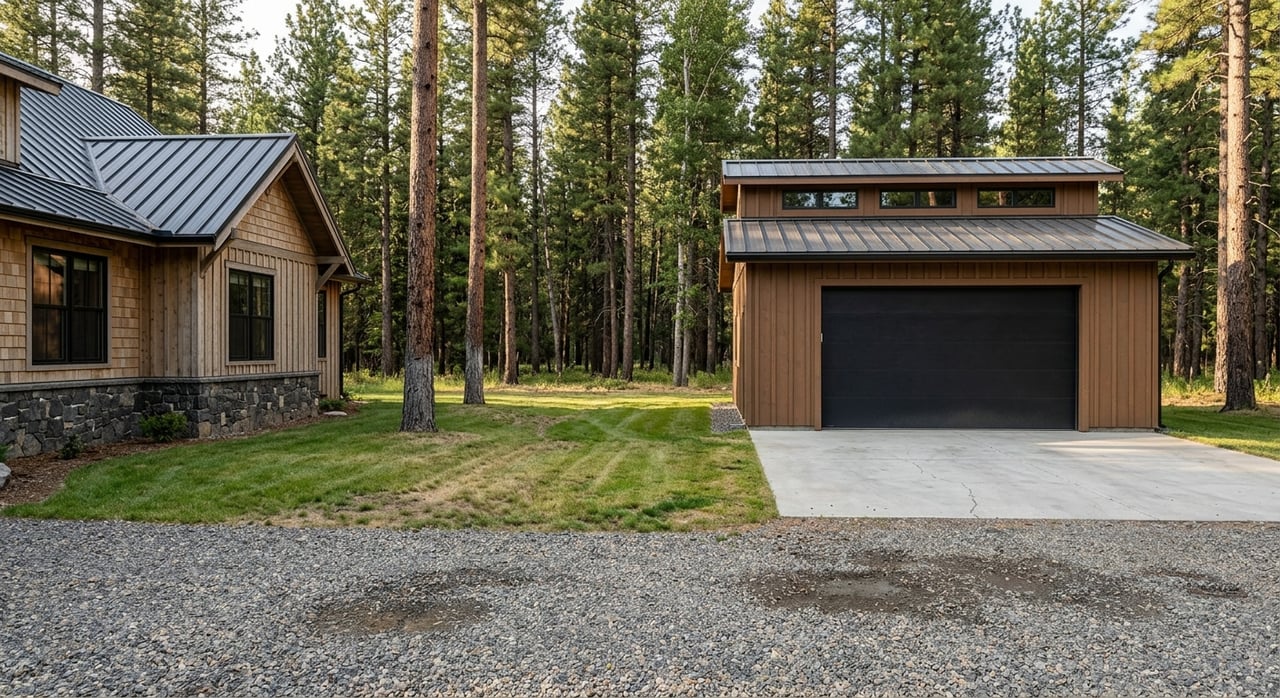
Many acreage buyers are not just shopping for a home site. They are also thinking about a garage, pole barn, larger storage building, fencing, or even cargo-container storage. Those features can be part of the appeal, but they should be reviewed alongside the primary residence plan.
Kootenai County’s Building Division issues permits for garages, pole barns, fences over seven feet, residential storage buildings over 200 square feet, commercial storage buildings over 120 square feet, and site-disturbance work such as grading and excavation. County ordinance 611 also addresses personal storage buildings and cargo containers in multiple zones, including acreage-based size limits.
On parcels of 5 acres or more, ordinance 611 includes a personal storage building size limit of 5,000 square feet and allows one cargo container per 5 acres. Those details may matter if you are buying land with a strong utility focus. They also matter if resale is part of your long-term thinking.
A good rule of thumb is to plan the full property together. Your home, driveway, well, septic area, outbuildings, and access patterns should make sense as one complete layout.
If your plans involve farming or timber, tax classification may be part of the financial picture. Kootenai County offers agricultural and timber classifications that can affect taxes and valuation. These are not automatic, so timing and documentation matter.
The agricultural application deadline is April 15 of the year the owner seeks the classification. The timber deadline is December 31 for the following year, and timberland owners must report substantial changes in use within 30 days. Both programs also require the parcel to be accessible for inspection before approval.
This is one more reason to think beyond the purchase price. If the land’s actual use, zoning, and tax treatment do not line up with your goals, you may face avoidable surprises later. The best acreage purchases usually begin with a clear plan for how you want to live on the land and how that plan fits the property.
Before buying acreage near Athol, make sure you can answer these questions:
Buying acreage near Athol can be deeply rewarding when the property fits both your vision and the rules that govern it. The key is to move past the surface appeal and study access, water, septic, use, and layout as one complete package. If you want calm, practical guidance as you compare parcels in North Idaho, Stephen Vachon can help you evaluate the details that matter before you buy.
Stay up to date on the latest real estate trends.
Work with a trusted local expert dedicated to helping you navigate the market and achieve your real estate goals. Get personalized real estate support from start to finish, whether you’re buying, selling, or relocating in Coeur d’Alene.
STEPHEN H. VACHON
223 E Sherman Ave Coeur d'Alene, ID 83814